


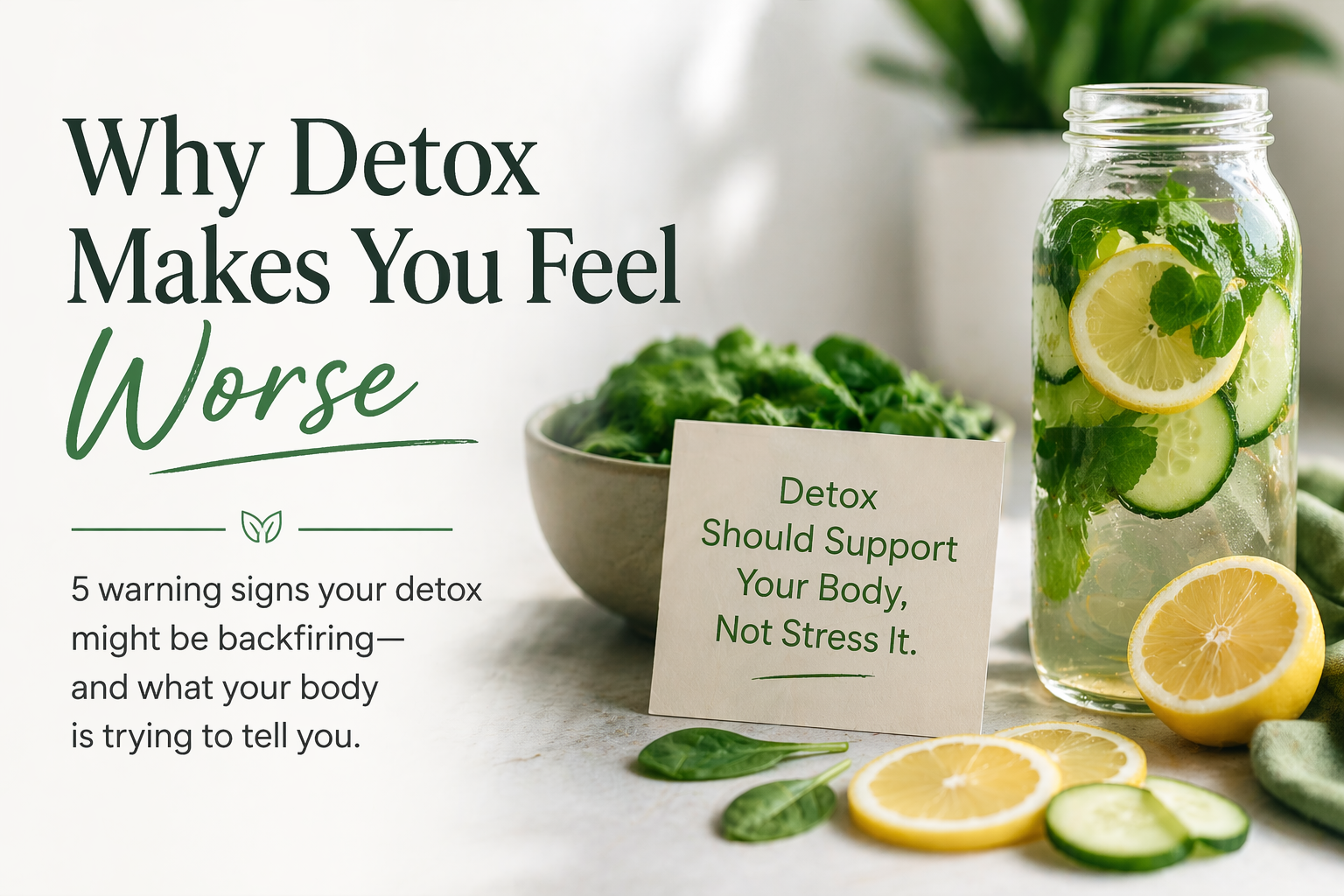

If you’ve ever wondered why detox makes you feel worse instead of better, you’re not alone.
Every spring, the same pattern shows up. Juice cleanses start trending again. Detox teas flood social media. “Reset your body in 7 days” becomes the promise everywhere you look. And after a long season of stress, especially something like tax season, the idea of starting fresh feels right.
The intention behind detoxing isn’t wrong. In fact, spring is traditionally considered the best time to support the liver in both functional medicine and Traditional Chinese Medicine. Your body is naturally shifting, and detoxification pathways are more active.
But what most people don’t realize is that feeling worse during a detox isn’t always part of the process. In many cases, it’s a sign that something is off.
Not with your body, but with the approach.
When Detox Symptoms Are a Warning Sign
There’s a common belief that discomfort during a cleanse means it’s “working.” That fatigue, headaches, or breakouts are part of a healing crisis.
But clinically, that’s not always what’s happening.
When detox symptoms get worse, it usually means your body is being pushed faster than it can process and eliminate toxins. Instead of clearing them out, you’re circulating them.
And that changes everything.
1. You Feel More Exhausted Than Before
A well-supported detox should create more energy, not less. You might feel lighter, clearer, even mentally sharper within a few days.
But when fatigue gets worse, especially early on, it often points to a mismatch in liver detox pathways.
Your liver works in phases. Phase I breaks toxins down into intermediate compounds. Phase II neutralizes and prepares them for elimination. If Phase I is moving quickly, but Phase II can’t keep up, those intermediates build up in the system.
That buildup can feel like deep fatigue, brain fog, or even flu-like symptoms.
It’s not your body failing. It’s your detox moving without the support it needs.
2. Your Skin Starts Breaking Out
Skin flare-ups during detox are often dismissed as part of the process, but they’re actually one of the clearest signs that your system is overwhelmed.
When your liver and gut can’t keep up with toxin elimination, your body looks for another exit route. The skin becomes that pathway.
This is especially common when drainage hasn’t been supported first. Bile flow, bowel movements, and lymphatic circulation all need to be functioning well before detox begins.
Without that foundation, you’re pushing toxins out, but not in the way your body is designed to handle.
3. Headaches Show Up Around Day 3
This is one of the most consistent patterns seen in standard cleanses.
Around day three, many people start experiencing headaches. It’s often blamed on caffeine withdrawal or adjustment, but there’s more happening underneath.
Blood sugar levels tend to become unstable during restrictive detox programs, especially those based on juice fasting or low-calorie intake. At the same time, toxins that have been mobilized are circulating without a clear exit route.
That combination creates pressure in the system.
The headache isn’t a sign that detox is working. It’s a sign that toxins have moved, but haven’t left.
4. Cravings Come Back Stronger
One of the biggest red flags happens after the detox ends.
If you find yourself craving sugar, alcohol, or processed foods more intensely than before, your system hasn’t been reset. It’s been dysregulated.
Aggressive detox programs can disrupt blood sugar balance and neurotransmitter function. When that happens, your body compensates by increasing cravings to restore stability.
This is why so many people feel like they’ve failed after a cleanse.
In reality, the process didn’t address the root cause.
5. Your Digestion Feels Worse
Digestive changes like bloating, constipation, or loose stools are often overlooked, but they’re one of the most important signals.
Many detox programs focus heavily on raw foods, juices, or strong herbal protocols. While those may work for some, they can disrupt the gut microbiome in others.
In Traditional Chinese Medicine, this would be seen as weakening the digestive system before properly supporting the liver. In functional medicine, we look at how these approaches impact gut bacteria, enzyme production, and overall digestion.
If your gut becomes more unstable during or after a detox, it’s a sign that the foundation wasn’t supported.
What’s Actually Going On
All of these symptoms point to the same underlying issue.
A one-size-fits-all detox applied to a body that has its own unique metabolic needs.
Your liver enzyme capacity, your gut health, your stress levels, your nutritional status, and even your constitutional type all influence how your body processes toxins.
What works well for one person can feel completely wrong for another.
This isn’t about doing detox the “right” way in general. It’s about doing the right detox for your body.

Why Personalized Detox Matters
In a clinical setting, detox isn’t something you jump into blindly.
Before recommending any protocol, we look at how your body is functioning right now. That includes your metabolic type, your current toxic burden, how well your drainage pathways are working, and whether your system is ready to detox at all.
Sometimes the first step isn’t detoxing.
It’s preparing the body so detox can happen safely and effectively.
That’s the difference between a temporary cleanse and a process that actually improves energy, digestion, and long-term health.
Before You Try Another Cleanse
If you’ve experienced any of these symptoms, fatigue, headaches, breakouts, cravings, or digestive issues, your body is giving you useful information.
It’s not rejecting detox.
It’s asking for a different approach.
At Longevity Wellness Clinic in Lakewood Ranch, Florida, we focus on understanding your body before applying any protocol. That’s how we create detox plans that support your system instead of overwhelming it.
If you’re not sure where to start, that’s exactly what the first step is for.
Take the Next Step
If you’re considering a detox, or if past cleanses have left you feeling worse instead of better, it may be time to take a more personalized approach.
You can start with a Virtual Complimentary 10-Minute Consult, where we look at your symptoms and help you understand what your body actually needs next.