


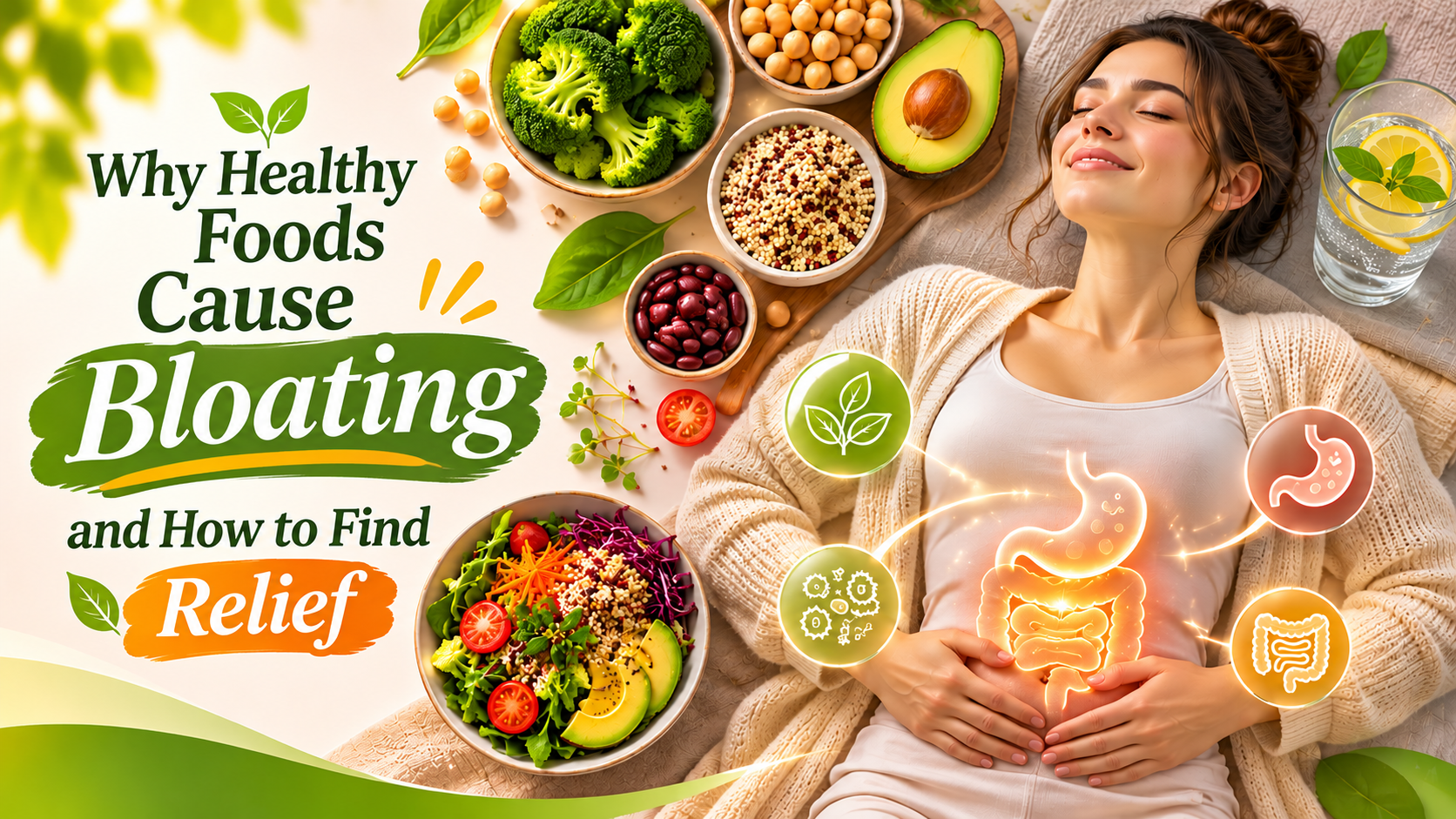
Eating healthy but still feeling bloated? Discover why nutritious foods can sometimes cause digestive discomfort, what your gut may be telling you, and how simple changes can help.
“I eat a salad every day for lunch,” she told me, sounding frustrated.
“Kale, raw broccoli, chickpeas, avocado—the works. I’ve never eaten this healthy in my life. And I’ve never felt more bloated.”
By mid-afternoon, her waistband felt uncomfortably tight. By evening, her stomach was visibly swollen.
She couldn’t understand it.
She had replaced processed foods with vegetables, increased her fiber intake, and made a real effort to improve her diet. Yet instead of feeling healthier, she felt uncomfortable after almost every meal.
Sound familiar?
Here’s something important to understand: Healthy food doesn’t always mean easy-to-digest food.
Even nutritious foods can cause bloating, gas, and digestive discomfort depending on your gut sensitivity, portion sizes, food preparation, and eating habits.
With Thanksgiving approaching, now is the perfect time to understand why bloating happens and how you can enjoy your favorite meals without unnecessary discomfort.
Why Do Healthy Foods Cause Bloating?
You might assume that eating more vegetables, fruits, beans, and whole grains should automatically improve digestion.
And while these foods offer important nutritional benefits, some contain carbohydrates and fibers that can contribute to intestinal gas.
Your digestive system doesn’t process every food in exactly the same way.
Certain carbohydrates aren’t completely absorbed in the small intestine. Instead, they travel to the large intestine, where gut bacteria ferment them.
This fermentation produces gases such as hydrogen, carbon dioxide, and, in some individuals, methane.
The result?
You may experience abdominal fullness, gas, pressure, or visible bloating.
Common Healthy Foods That Can Trigger Bloating
Some nutritious foods are more likely to cause digestive discomfort in sensitive individuals:
-
Broccoli, cauliflower, and cabbage: Contain fermentable carbohydrates and fiber that may increase gas.
-
Beans, chickpeas, and lentils: Rich in protein and fiber but also contain fermentable oligosaccharides.
-
Apples and pears: Contain fructose and sorbitol, which can cause symptoms in some people.
-
Onions and garlic: High in fructans, a type of fermentable carbohydrate.
-
Large raw salads: Can be difficult for some people to tolerate because of their fiber content and volume.
Many of these foods contain compounds known as FODMAPs, or fermentable oligosaccharides, disaccharides, monosaccharides, and polyols.
For individuals with irritable bowel syndrome (IBS), certain FODMAPs can contribute to bloating and abdominal discomfort.
However, this doesn’t mean you should eliminate all these foods.
The goal is to identify what your digestive system tolerates and adjust portions or preparation methods accordingly.
The Gut-Brain Connection: Why Stress Can Make Bloating Worse
Have you ever noticed that your stomach feels uncomfortable during a stressful day?
Perhaps you eat the same lunch you always enjoy, but after a difficult meeting, you suddenly feel bloated.
That’s because your digestive system and brain are constantly communicating through what scientists call the gut-brain axis.
Stress can influence intestinal movement, digestive sensations, and how your brain interprets signals coming from the gut.
For some individuals, this increases sensitivity to normal amounts of intestinal gas.
You may feel extremely bloated even when your digestive tract contains no unusual amount of gas.
Stress can also affect eating behavior.
When you’re rushing through lunch, you may chew less thoroughly, swallow more air, or eat beyond comfortable fullness.
These habits can contribute to digestive discomfort.
Digestion Begins Before Your First Bite
Your body begins preparing for digestion before food even reaches your stomach.
The sight, smell, taste, and anticipation of a meal activate the cephalic phase of digestion.
During this process, your nervous system helps stimulate saliva and digestive secretions.
This prepares your body to process incoming food.
Eating while distracted doesn’t stop digestion, but rushing, stress, and swallowing excess air may contribute to uncomfortable symptoms.
Try giving yourself a few minutes to sit down, breathe comfortably, and enjoy your meal.
Sometimes, improving digestion starts with changing how you eat rather than what you eat.
What Traditional Chinese Medicine Says About Bloating
Traditional Chinese Medicine (TCM) offers a different perspective on digestive health.
In TCM, the Spleen and Stomach are traditionally responsible for transforming food into nourishment and supporting the movement of Qi throughout the body.
These concepts refer to traditional functional systems rather than the anatomical organs described in Western medicine.
TCM often compares digestion to a cooking pot sitting over a warm fire.
The pot represents the Stomach, while the fire symbolizes the body’s ability to transform food into usable nourishment.
According to this framework, consuming excessive amounts of cold or raw food may challenge individuals whose digestive function is considered weak.
A TCM practitioner might describe symptoms such as bloating, heaviness, fatigue, and poor appetite as patterns involving Spleen Qi deficiency or Dampness.
These are traditional diagnostic concepts, not scientifically established explanations for intestinal gas or fermentation.
Nevertheless, choosing cooked foods, eating regularly, and paying attention to digestive comfort can be practical strategies for some people.
Your Digestive System Is Like a Kitchen Crew
Imagine walking into a busy restaurant kitchen.
The chefs are preparing ingredients, heating pans, coordinating orders, and making sure every dish comes together.
Your digestive system works through a similarly coordinated process.
Digestive enzymes help break down food.
Stomach acid contributes to protein digestion.
Bile helps your body digest and absorb fats.
Hormones and nerves coordinate movement and digestive secretions.
Now imagine asking that kitchen crew to prepare an enormous feast with limited equipment.
Even a skilled team may struggle.
Similarly, large meals, sudden increases in fiber, or foods that are difficult for you to tolerate can place greater demands on your digestive system.
Bloating doesn’t necessarily mean your digestive organs are weak or malfunctioning.
Sometimes, it’s simply a sign that your meal composition, portion size, or eating habits could use adjustment.
How Bloating Appears in Three Dolphin Types
At Longevity Wellness Clinic, the Decode Your Dolphin framework encourages individuals to recognize patterns in digestion, stress, and overall wellness.
These Dolphin types are wellness metaphors, not medically validated digestive diagnoses. They cannot determine the cause of bloating or replace appropriate medical evaluation.
1. The Manatee: Feeling Heavy After Meals
In the Dolphin framework, the Manatee represents someone who may experience digestive heaviness, early fullness, or discomfort after eating.
Perhaps you feel satisfied after only a few bites, or large salads leave you uncomfortable for hours.
From a TCM perspective, these symptoms might be interpreted as a pattern involving Spleen Qi deficiency.
If raw vegetables are difficult for you to tolerate, try preparing them differently.
Steam your broccoli, sauté your spinach, or roast your carrots until tender.
You can also introduce beans gradually, beginning with a small portion and increasing as tolerated.
Cooking and portion adjustments may help reduce symptoms while allowing you to continue enjoying nutritious foods.
Persistent early fullness, however, should be assessed by a healthcare professional.
2. The Pufferfish: When Stress Makes Your Belly Feel Tight
A pufferfish expands when threatened.
In the Dolphin framework, the Pufferfish represents individuals whose bloating may fluctuate alongside stress, hormonal changes, or feelings of tension.
Perhaps your stomach feels comfortable in the morning but becomes increasingly distended throughout the day.
Or you notice more bloating around your menstrual cycle.
Hormonal changes, fluid retention, constipation, and gut sensitivity can all influence abdominal discomfort.
In TCM, some of these patterns may be described as Liver Qi stagnation affecting the Spleen.
For the Pufferfish, consistent meals, stress-management techniques, and gentle physical activity may help support digestive comfort.
Try taking a short walk, practicing slow breathing, or enjoying meals without multitasking.
3. The Silky Shark: Discomfort After Rich Meals
In the Dolphin framework, the Silky Shark represents someone who may notice digestive discomfort after fatty, fried, or particularly rich meals.
Perhaps you feel unusually full after a creamy pasta dish or experience nausea following a heavy dinner.
Fat slows stomach emptying, which can contribute to prolonged fullness in some people.
However, recurring pain in the upper abdomen, particularly after fatty meals, may also suggest a condition involving the gallbladder or another digestive organ.
In TCM, certain symptoms may be interpreted through traditional Liver and Gallbladder patterns.
For everyday comfort, try moderate portions of richer foods and include vegetables and lean protein.
Bitter greens such as arugula or radicchio can add variety, but they aren’t proven treatments for gallbladder problems.
If you repeatedly experience upper abdominal pain, nausea, or discomfort after meals, seek medical evaluation.
Two Simple Ways to Reduce Bloating Naturally
You don’t necessarily need to eliminate entire food groups to improve digestive comfort.
Start with these practical changes.
1. Build a Five-Flavor Plate
Traditional Chinese Medicine recognizes five flavors: sweet, sour, bitter, pungent, and salty.
Each flavor is traditionally associated with different functions and organ systems.
You can explore this idea by preparing a balanced meal containing:
-
Sweet: Roasted squash or sweet potato.
-
Sour: A squeeze of fresh lemon.
-
Bitter: A small portion of arugula or radicchio.
-
Pungent: Fresh ginger or scallions.
-
Salty: A modest amount of salt or gluten-free tamari.
The five-flavor approach is a traditional culinary framework, not a clinically proven treatment for bloating.
Still, it can encourage variety and mindful meal preparation.
Choose ingredients you tolerate well, and enjoy your meal slowly.
2. Try Cooked Vegetables Instead of Large Raw Salads
If you frequently experience bloating after eating raw vegetables, experiment with cooked alternatives.
Instead of a large kale salad, try sautéed kale with roasted carrots.
Replace raw broccoli with steamed broccoli.
Enjoy warm vegetable soup rather than a large bowl of raw vegetables.
Cooking can soften plant tissues and make some foods easier to chew and tolerate, although it doesn’t remove every gas-producing carbohydrate.
You can also try smaller servings of beans and gradually increase your intake.
There’s no need for everyone to restrict raw vegetables to a fixed number of days per week. Let your symptoms and nutritional needs guide your choices.
Thanksgiving Tips: Enjoy Your Meal Without the Bloating
Thanksgiving is a time for gratitude, connection, and delicious food.
But large holiday meals can sometimes leave you feeling overly full.
A few small habits may help:
Start with a comfortable portion rather than filling your plate beyond what feels satisfying.
Eat slowly and give yourself time to enjoy the flavors.
If warm soup agrees with your digestion, consider having a small serving.
After dinner, take a gentle 10-minute walk to support normal digestive movement.
And most importantly, enjoy your favorite holiday foods without guilt.
One Thanksgiving meal doesn’t define your health. Your overall habits matter much more.
If bloating is new, persistent, worsening, or accompanied by unexplained weight loss, vomiting, blood in your stool, changes in bowel habits, or reduced appetite, contact your healthcare provider. Persistent bloating warrants particular attention after menopause.
Gratitude Belongs at the Table, Too
Thanksgiving reminds us that food is more than fuel.
It’s an opportunity to gather, share stories, celebrate traditions, and appreciate the people around us.
But perhaps this year, gratitude can extend to your own body.
Your digestive system works every day to break down food, absorb nutrients, and support your overall health.
It doesn’t need perfection.
It needs attention, consistency, and care.
If healthy foods leave you feeling bloated, don’t immediately assume you’re doing something wrong.
Instead, become curious.
Notice which foods cause discomfort, how much you’re eating, and whether stress or eating habits influence your symptoms.
Healthy eating isn’t about forcing your body to tolerate every nutritious food. It’s about finding a balanced way of eating that nourishes you and feels comfortable.
Let’s Understand Your Digestive Health Together
At Longevity Wellness Clinic, Dr. Cynthia Clark takes a whole-person approach to wellness, exploring how nutrition, lifestyle, stress, and Traditional Chinese Medicine principles may relate to digestive comfort.
If you’re struggling with persistent bloating or uncomfortable digestion, we’re here to help you explore appropriate next steps.
Book your FREE 10-minute complimentary consultation with Dr. Cynthia Clark.
Schedule Your Free Consultation
Because feeling better begins with understanding what your body needs.