


In the United States, breakfast is often framed as a moral choice. A good breakfast is light, clean, and quick. A bad breakfast is heavy, indulgent, or skipped entirely.
But for millions of adults, especially those in midlife, this framing misses the real issue.
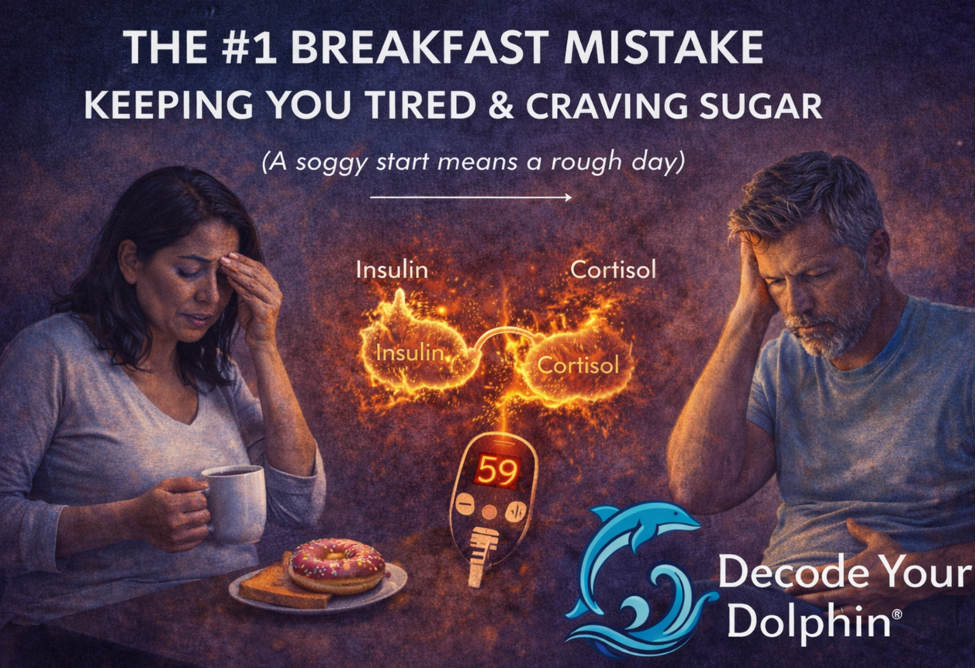
The most common breakfast mistake in the United States is starting the day without enough metabolic anchoring. This usually happens by leading with carbohydrates, skipping protein, or delaying food entirely while stress hormones are already active.
This mistake does not look reckless. In fact, it often looks responsible.
A smoothie grabbed on the way out the door
Toast with nut butter
Oatmeal with fruit
Coffee alone because appetite feels off
These are some of the most common American breakfasts. For many people, they are exactly what sets the body up for fatigue, cravings, and unstable energy later in the day.
Why This Breakfast Pattern Is So Common in the United States
American breakfast culture emphasizes convenience and lightness. Many people are taught to save calories in the morning, delay eating, or avoid protein and fat early in the day. Busy schedules, early work hours, and chronic stress make this pattern even more common.
What often gets overlooked is what the body is doing hormonally in the morning.
By the time you wake up, cortisol is already rising. This is normal. Cortisol’s role in the morning is to mobilize energy, increase alertness, and help you transition into the day. The problem occurs when cortisol rises into a system that does not receive a clear and stabilizing signal of fuel.
When breakfast is too light, too heavy in carbohydrates, or skipped altogether, the body interprets this as uncertainty.
What Happens in the Body When Breakfast Lacks Protein
From a metabolic perspective, leading with carbohydrates or skipping protein sends a similar message to stress. Energy may not be reliable.
Blood sugar rises quickly, then falls.
Insulin follows.
Cortisol remains elevated to compensate.
The brain does not read this as nourishment. It reads it as instability.
The result is predictable and extremely common in the United States.
Mid morning fatigue
Sugar or caffeine cravings
Irritability or brain fog
A second energy crash in the afternoon
Increased desire for quick, processed foods
This is not a willpower issue. It is a physiological response to mixed signals.
Why This Becomes a Bigger Problem After Forty
In younger adults, hormonal buffering is often stronger. Muscle mass is higher, insulin sensitivity is better, and the nervous system recovers more easily from fluctuations in blood sugar.
After forty, the context changes.
For women, perimenopause and menopause bring fluctuations in estrogen that affect glucose handling and insulin sensitivity. Blood sugar swings become more pronounced, and the margin for error at breakfast gets smaller.
For men, gradual declines in testosterone are often accompanied by reduced muscle mass and insulin sensitivity. This also limits the body’s ability to buffer carbohydrate heavy meals.
In both cases, cortisol steps in to fill the gap. When cortisol stays elevated, cravings intensify, energy becomes unpredictable, and fat storage becomes more likely, particularly around the abdomen.
Why Cravings Are Not a Personal Failure
One of the most damaging beliefs in American nutrition culture is that cravings reflect a lack of discipline.
In reality, cravings are often a request for stability.
Think of the body as a system that checks its resources first thing in the morning. If fuel arrives quickly and disappears just as fast, the system stays on alert. Cortisol remains active. The nervous system nudges behavior toward quick energy sources.
Sugar cravings are not greed.
They are an attempt to stabilize a wobbling platform.
This is why forcing yourself to push through cravings rarely works. From the body’s perspective, resources are still uncertain and the threat signal has not been resolved.
What a Stabilizing Breakfast Actually Does
A breakfast anchored in adequate protein, supported by sufficient fat and calm timing, sends a very different message.
It tells the nervous system that fuel is predictable.
It reduces the need for cortisol to compensate.
It stabilizes blood sugar instead of swinging it.
When this happens, energy becomes steadier, cravings soften, and the day stops feeling like a metabolic emergency.
This does not require perfection. It requires clarity.
The goal is not to eat less in the morning, but to eat in a way that helps the body feel resourced early.
Why Breakfast Is a Leverage Point, Not a Test
In the United States, breakfast is often treated as a test of discipline. From a physiological perspective, it is one of the most powerful leverage points of the day.
It is the first opportunity to signal safety, predictability, and support to a nervous system that has often been under chronic demand.
When the morning stops feeling like scarcity, the rest of the day often follows.
Not because you controlled yourself better.
But because your body trusted what was coming next.
The Takeaway
The most common breakfast mistake in the United States is not eating the wrong food. It is sending an unclear signal to a system that is already under stress.
When breakfast lacks protein, arrives too late, or leans too heavily on carbohydrates, the body responds exactly as it is designed to by conserving energy and seeking stability.
Understanding this shift changes the conversation from discipline to physiology.
And that is where sustainable energy, reduced cravings, and better metabolic health begin.