


Living with the Season: The Physiology of Summer Heat and True Hydration
Are you drinking a gallon of water a day but still feeling thirsty, fatigued, foggy, swollen, or drained?
If you live in Florida, especially here in Lakewood Ranch, Sarasota, Bradenton, or the surrounding Gulf Coast area, summer heat is not just a seasonal inconvenience. It is a physiological stressor. The humidity is high, the sun is intense, and your body is working all day to keep your temperature, blood pressure, minerals, digestion, and nervous system in balance.
We are deep into summer, and everywhere you look, someone is carrying an enormous water bottle. We have been conditioned to believe that hydration is simply a matter of drinking more water. But if you are drinking water all day and still feeling depleted, your body may be trying to tell you something important.
True hydration is not just about volume.
It is about absorption.
It is about minerals.
It is about how well water actually gets into your cells.
This week, we are looking at what nature is asking your body to do during summer heat, why plain water may not be enough, and how your Decode Your Dolphin archetype can help us understand your unique hydration needs.
If you have not yet discovered your unique physiological pattern, take a moment to complete the quiz here. Understanding your archetype is the first step in decoding the messages your body is sending you.
Why Drinking More Water Is Not Always the Answer
Think of a potted plant that has been left in the hot sun until the soil is completely bone dry. If you pour a large glass of water over it all at once, the water does not absorb. It simply runs down the sides of the pot and out the bottom. The plant remains dehydrated despite the amount of water applied.
Your cells operate on a similar principle.
When the summer heat arrives, your body changes its priorities. To keep you cool, your blood vessels dilate, moving blood closer to the surface of your skin to release heat. You sweat, which is a brilliant cooling mechanism, but it comes at a cost.
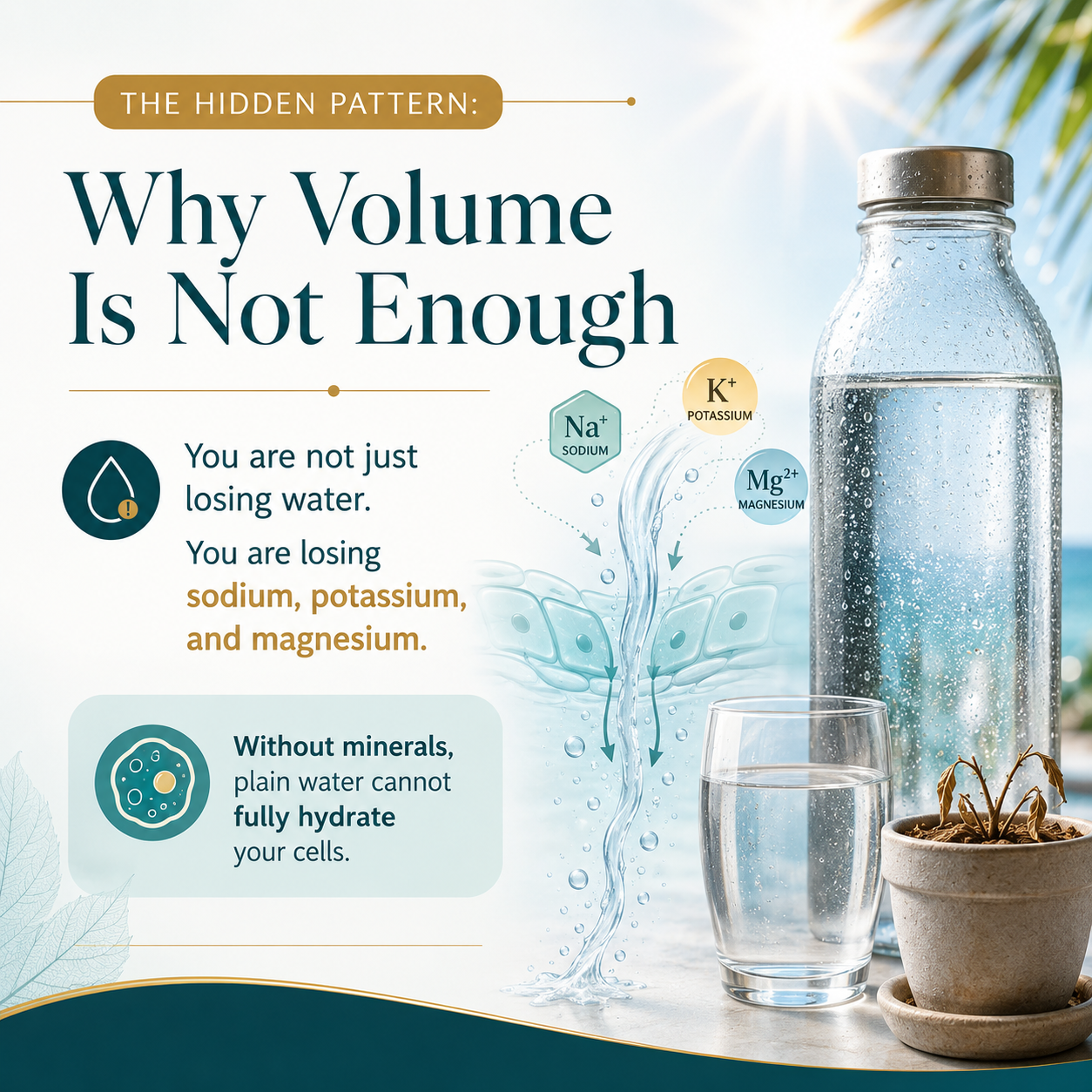
You are not just losing water.
You are losing essential minerals such as sodium, potassium, and magnesium. These minerals act like electrical conductors inside the body. They help regulate fluid balance, muscle contraction, nerve signaling, blood pressure, energy, and even how calm or restless your nervous system feels.
Without these minerals, plain water may not fully enter the cells where it is needed. It can simply flush through your system, often taking even more minerals with it. This is why you can drink water all day and still feel thirsty, tired, foggy, dizzy, or depleted.
This is one of the most misunderstood parts of summer hydration.
You can be full of water and still be poorly hydrated at the cellular level.
The TCM View: Summer Is the Season of Fire
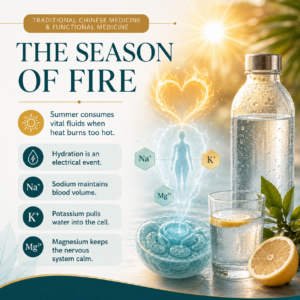
In Traditional Chinese Medicine, summer is the season of Fire. It is associated with the Heart and the Small Intestine. This is a time of maximum Yang energy, which means outward movement, joy, expansion, activity, warmth, and connection.
But fire requires balance.
If the Fire of summer burns too hot without adequate cooling resources, also known as Yin, it begins to consume the body’s vital fluids. The Heart, which governs circulation and houses the mind in Traditional Chinese Medicine, can become agitated.
This is why dehydration is not always experienced as thirst alone.
It can feel like anxiety.
It can feel like brain fog.
It can feel like restlessness, insomnia, palpitations, irritability, dizziness, weakness, or a sudden drop in energy.
The body is trying to maintain the delicate balance between the outward expression of summer and the internal preservation of its resources.
A holistic doctor, acupuncturist, or nutritionist trained in Traditional Chinese Medicine looks at hydration differently. We are not only asking, “How much water are you drinking?” We are also asking, “Can your body actually use it?”
The Functional Medicine View: Hydration Is an Electrical Event
From a Functional Medicine perspective, hydration is an electrical event.
Sodium helps maintain blood volume, which is especially important when blood vessels are dilated from the heat.
Potassium helps pull water inside the cell, where hydration actually becomes useful.
Magnesium regulates the entire process and helps keep the nervous system calm.
When you sweat out these minerals and replace them only with plain water, you may dilute the remaining electrolytes in your bloodstream. The kidneys then work to restore balance by excreting more water. This can create a frustrating cycle of drinking, urinating, and worsening cellular dehydration.
This is why people in Florida heat may feel like they are “doing everything right” by drinking water, yet still experience symptoms such as fatigue, muscle cramps, headaches, afternoon crashes, dizziness, cravings, swelling, or brain fog.
The issue is not always lack of water.
Sometimes it is lack of mineral balance.
How Summer Heat Shows Up in the Archetypes
Different physiological types handle summer heat differently. This is where the Decode Your Dolphin framework becomes useful because not everyone needs the same hydration strategy.
The Silky Shark
The Silky Shark can burn hot and fast. This archetype tends to push through discomfort and stay active even when the body is already depleted.
In the Florida summer heat, the Silky Shark may lose minerals quickly through sweat. Their dehydration often shows up as sudden muscle cramping, sharp headaches, irritability, restlessness, and an abrupt crash in energy.
The Silky Shark usually needs more intentional mineral replenishment, especially if they are exercising, working outside, sweating heavily, or running on stress and caffeine.
For this type, hydration should include electrolytes, mineral rich foods, and a more consistent rhythm of sipping throughout the day instead of waiting until the body is already depleted.
The Blue Whale
The Blue Whale tends toward fluid retention, sluggish circulation, inflammation, and heaviness. In summer heat, their body may struggle to manage fluid balance effectively.
They may feel swollen, puffy, heavy, lethargic, and foggy. Drinking massive amounts of plain water may only make the waterlogged feeling worse.
For the Blue Whale, hydration is not just about adding more fluid. It is about helping water move to the right place. Minerals, especially potassium and magnesium, may help support better fluid movement and cellular hydration.
Blue Whale types may do better with mineral rich hydration, gentle movement, lymphatic support, and avoiding excess sugar, processed foods, and inflammatory meals that worsen swelling and heaviness.
The Dolphin
The Dolphin represents the ideal state of physiological resilience. A Dolphin can move through the intense energy of summer with more ease.
They naturally gravitate toward seasonal, mineral rich foods and tend to listen to the body before symptoms become extreme. Their system manages the balance of fluids, electrolytes, energy, and recovery more efficiently.
The goal for every archetype is not perfection. The goal is to swim closer to Dolphin balance by learning how to work with the season instead of fighting it.
The Fix: Eat Your Water
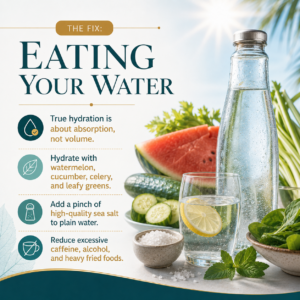
The most effective way to hydrate is not only to drink water, but also to eat it.
Nature provides exactly what we need during the season we need it. Summer foods are naturally rich in structured water, minerals, antioxidants, and cooling properties.
Watermelon, cucumber, celery, leafy greens, citrus, berries, mint, and coconut water can help hydrate the body in a more complete way than plain water alone.
One simple step you can take today is to stop drinking plain water in isolation all day. Add a small pinch of high quality sea salt to your water bottle. The trace minerals in the salt can help provide the electrical charge needed to support absorption.
If you are sweating heavily, exercising, spending time outside, or feeling depleted in the Florida heat, you may also benefit from a clean electrolyte supplement or a splash of coconut water.
At the same time, reduce foods and drinks that generate excessive internal heat. These include heavy fried meals, excess caffeine, alcohol, and sugary drinks. These force the body to work harder to maintain its cooling systems.
Signs You May Need Better Summer Hydration Support
You may need more than plain water if you notice:
You drink water all day but still feel thirsty.
You feel tired, foggy, or dizzy in the heat.
You get headaches during hot weather.
You crave salt or sugar in the afternoon.
You feel swollen or puffy after drinking more water.
You experience muscle cramps, especially at night.
You urinate frequently but still feel dehydrated.
You feel anxious, restless, or overheated.
These symptoms do not always mean something serious is happening, but they are important clues. Your body may be asking for better mineral support, better pacing, and a more personalized hydration strategy.
True Hydration Is About Absorption
Your body is not a bucket to be filled. It is a complex electrical system to be balanced.
True hydration is not about forcing more water in. It is about helping your body absorb and use fluids properly.
When we align our hydration strategy with the season, we stop flushing the system and start nourishing it.
If you are struggling with fatigue, brain fog, swelling, dizziness, muscle cramps, or low energy this summer, your hydration pattern may be part of the story.
At Longevity Wellness Clinic in Lakewood Ranch, we help patients understand how summer heat, electrolytes, metabolism, hormones, digestion, and nervous system regulation are connected. Through acupuncture, Traditional Chinese Medicine, functional nutrition, and the Decode Your Dolphin framework, we look at the whole person rather than giving one size fits all advice.
If you are looking for a holistic doctor, acupuncturist, or nutritionist in Lakewood Ranch, we would be happy to help you understand your unique pattern.
Take the quiz here to discover your archetype.
For inquiries, call or text 941-923-9355.