


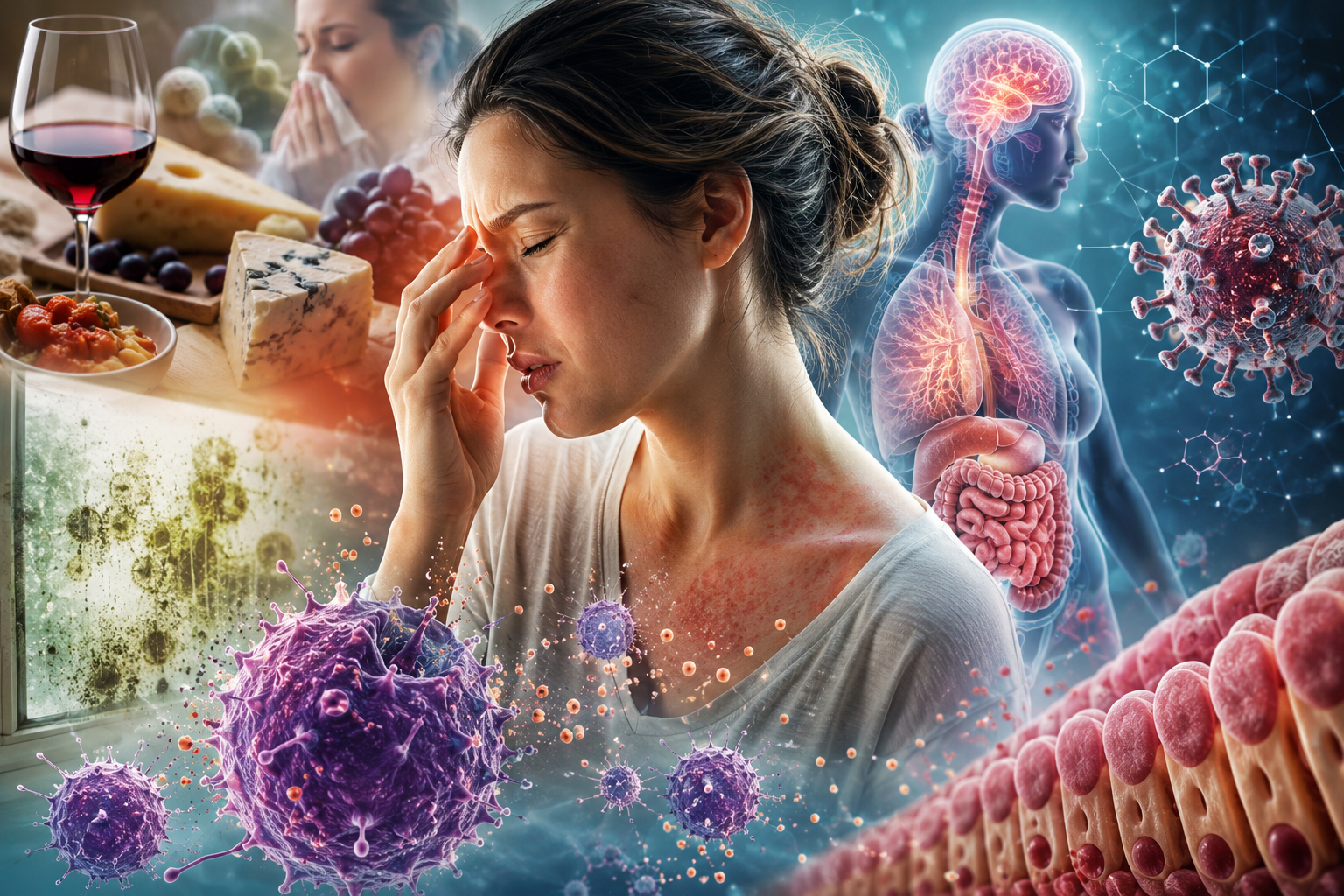
The Perfect Storm: Long COVID, Histamine Intolerance, and the New Allergies You Can’t Explain
Why Your Immune System Suddenly Feels Like It’s Reacting to Everything
Have you noticed that foods you used to enjoy now leave you feeling exhausted, bloated, itchy, anxious, or foggy headed?
Maybe a glass of red wine now triggers a migraine. Maybe leftovers leave you feeling sick. Maybe stress suddenly causes flushing, hives, headaches, or heart palpitations.
If this sounds familiar, you are not alone.
Since 2020, healthcare practitioners across the United States and Canada have seen a dramatic increase in people reporting symptoms that do not fit neatly into traditional allergy categories. Many of these individuals have been told their lab work looks normal, yet they continue to struggle with profound fatigue, food sensitivities, chemical sensitivities, brain fog, digestive issues, skin reactions, and unpredictable immune responses.
At Longevity Wellness Clinic and within the Decode Your Dolphin™ framework, we have seen this pattern repeatedly, especially among women in their 40s and 50s.
For many people, the missing piece may involve a combination of Mast Cell Activation Syndrome (MCAS), Histamine Intolerance (HIT), Long COVID, hormonal fluctuations, gut dysfunction, and environmental triggers such as mold exposure.
Understanding how these factors interact may help explain why your body suddenly seems to be reacting to everything.
What Are Mast Cells and Why Do They Matter?
Mast cells are an important part of your immune system.
Think of them as your body’s emergency response team.
They are strategically located throughout the body, especially in areas that regularly interact with the outside world, including the skin, digestive tract, respiratory tract, and blood vessels.
When mast cells detect a threat, they release chemical messengers designed to protect you. One of the most well-known chemicals they release is histamine.
Histamine plays several important roles in the body. It helps regulate immune responses, stomach acid production, blood vessel dilation, and communication within the nervous system.
The problem begins when mast cells become overly reactive.
Instead of responding appropriately to genuine threats, they begin releasing histamine and inflammatory chemicals in response to things that should not be dangerous.
This can create symptoms that seem completely unrelated but are actually connected through the same underlying mechanism.
The Long COVID Connection
One of the most important developments in recent years has been the growing recognition of the relationship between Long COVID and mast cell activation.
Research has shown that mast cells contain ACE2 receptors, which are the same receptors used by the SARS-CoV-2 virus to enter cells.
When the virus interacts with these receptors, it can trigger mast cell activation and the release of histamine and inflammatory cytokines.
This creates a unique situation.
Instead of a traditional allergy response, the immune system may become stuck in a chronically activated state.
For some individuals, even a relatively mild COVID infection appears to act as the trigger that initiates ongoing mast cell dysfunction.
Months or even years later, they may continue experiencing symptoms that seem difficult to explain.
Research has identified mast cell activation symptoms as a common feature among many individuals suffering from Long COVID.
This helps explain why some people report that they simply “never felt the same” after their infection.
Understanding Histamine Intolerance
Once mast cells become chronically activated, another problem often develops.
Histamine levels begin accumulating faster than the body can clear them.
Normally, the digestive tract produces an enzyme called diamine oxidase, commonly known as DAO.
DAO is responsible for breaking down histamine found in food.
However, chronic inflammation can damage the intestinal lining and reduce DAO production.
As DAO levels decrease, histamine from food begins accumulating in the bloodstream.
This creates a vicious cycle.
The more inflammation develops, the less DAO is produced.
The less DAO is available, the more histamine accumulates.
The more histamine accumulates, the more symptoms occur.
This is one reason why many people suddenly become sensitive to foods they previously tolerated without any problems.
Common Histamine Intolerance Symptoms
Histamine intolerance can present in many different ways, including:
• Headaches and migraines
• Skin flushing
• Hives and itching
• Digestive discomfort
• Heart palpitations
• Anxiety
• Brain fog
• Fatigue
• Nasal congestion
• Sleep disturbances
Because symptoms affect multiple systems simultaneously, many people struggle to find answers.
Why Midlife Women Are Particularly Vulnerable
Women in perimenopause and menopause often face an additional challenge.
Mast cells contain estrogen receptors.
Estrogen directly influences mast cell behavior and can stimulate histamine release.
During perimenopause, estrogen levels frequently fluctuate dramatically.
These fluctuations can further destabilize mast cells and amplify histamine related symptoms.
When Long COVID, gut dysfunction, DAO depletion, and hormonal fluctuations occur together, the result can be a significant inflammatory burden.
This is one reason we frequently see MCAS and histamine intolerance patterns emerge during midlife.
The Mold Connection Many People Miss
Another important factor is environmental exposure.
Mycotoxins produced by mold are among the most potent triggers of mast cell activation currently recognized.
Even low level chronic exposure can contribute to ongoing immune system activation.
For some individuals, hidden mold exposure becomes the factor that prevents recovery despite dietary changes, supplements, and lifestyle modifications.
Within the Decode Your Dolphin™ system, environmental stressors often play a critical role in understanding persistent inflammation and immune dysregulation.
Could Histamine Intolerance Be Driving Your Symptoms?
Ask yourself the following questions:
Do your symptoms affect multiple body systems at the same time?
For example:
• Digestive issues
• Skin reactions
• Brain fog
• Heart palpitations
Do seemingly unrelated triggers create symptoms?
Examples include:
• Heat
• Cold
• Exercise
• Emotional stress
• Strong odors
Do fermented foods, wine, aged cheeses, or leftovers make you feel worse?
Did symptoms begin or worsen after COVID?
Does stress consistently trigger physical symptoms?
If several of these sound familiar, histamine intolerance and mast cell activation may deserve further investigation.
The Decode Your Dolphin™ Perspective
Within the Decode Your Dolphin™ framework, this pattern often appears in the Blue Whale archetype, particularly the Jellyfish subtype.
The Blue Whale archetype frequently struggles with:
• Systemic inflammation
• Autoimmune tendencies
• Fatigue
• Immune dysregulation
• Increased sensitivity
However, we also commonly see mast cell patterns within the Pufferfish and Octopus archetypes.
The Octopus archetype is especially vulnerable because chronic stress hormones can directly activate mast cells.
High cortisol exposure, nervous system overload, and elevated allostatic load create the perfect environment for immune hyperreactivity.
Supporting the Body’s Return to Balance
Our goal is not simply to avoid histamine forever.
The goal is to address the underlying factors that created the problem.
This often includes:
Supporting Healthy Drainage Pathways
Standard Process Spanish Black Radish is frequently used to support liver detoxification pathways that help process histamine and environmental toxins.
Rebuilding Gut Integrity
Because DAO is produced within the intestinal lining, gut repair becomes a critical component of long term recovery.
Standard Process RNA is often used to support cellular repair and regeneration within rapidly dividing tissues.
Supporting Antioxidant Capacity
N Acetylcysteine (NAC) supports glutathione production, which helps address oxidative stress.
However, some individuals with significant mast cell activation may require very gradual introduction due to potential sensitivity.
Mast Cell Stabilization
Natural compounds such as Quercetin and Luteolin have demonstrated the ability to help stabilize mast cells and reduce histamine release.
Traditional Chinese Medicine has utilized similar principles for centuries when working with hyperreactive inflammatory conditions.
Traditional Medicine Is Becoming Part of Mainstream Healthcare
One of the most exciting developments in healthcare is the growing recognition of traditional medicine on a global scale.
The World Health Organization recently launched its Global Traditional Medicine Strategy 2025 through 2034.
The goal is to responsibly integrate evidence informed traditional approaches such as acupuncture, herbal medicine, and other time tested therapies into modern healthcare systems.
This is significant because many chronic health challenges require a broader perspective than symptom management alone.
Conditions involving inflammation, immune dysfunction, nervous system regulation, and metabolic health often benefit from a whole person approach.
Understanding the Root Cause Matters
If your immune system feels stuck on high alert, there may be more happening than a simple allergy.
Long COVID, histamine intolerance, mast cell activation, gut health, hormone fluctuations, environmental exposures, and chronic stress can all interact to create symptoms that seem confusing and disconnected.
The good news is that these patterns can often be identified and addressed when viewed through the right lens.
Understanding your metabolic archetype is often the first step toward understanding why your body is responding the way it is and what it needs to move toward greater resilience.