


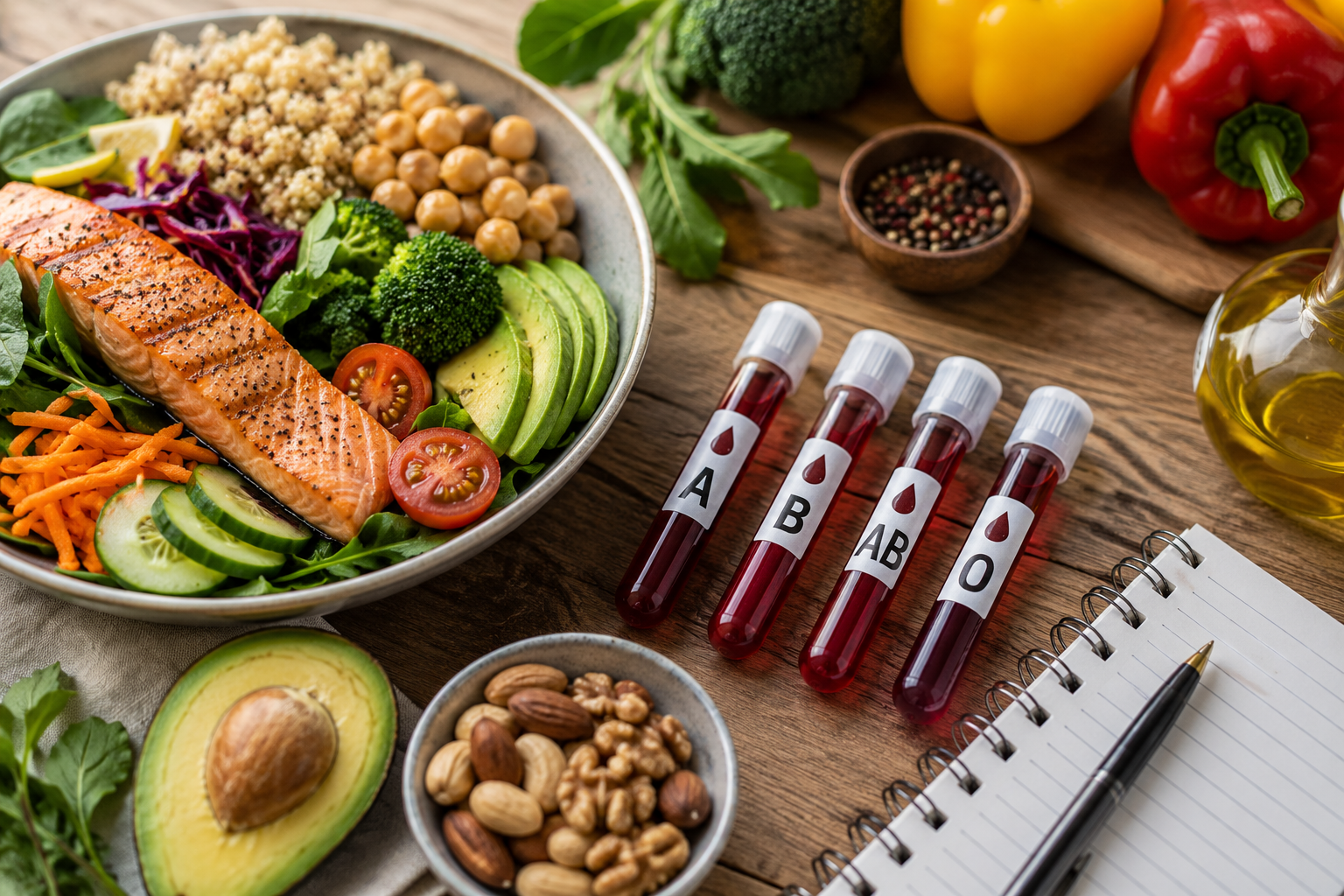
Why the Blood Type Diet Falls Short and What Personalized Nutrition Should Really Look Like
You have probably heard of the blood type diet. Maybe you have even tried it.
The idea sounds personal at first. If your blood type is O, A, B, or AB, then there must be a specific way you should eat. For people who are tired of generic diet advice, that can feel refreshing. It sounds more customized than simply being told to eat less, count calories, or follow whatever diet is trending online.
But here is the problem.
Your blood type alone does not tell the full story of your metabolism, your hormones, your digestion, your inflammation, or your nervous system.
And when people are searching for a holistic doctor, natural nutritionist, or virtual consultation in the USA or Canada, this is usually what they are really looking for. They do not just want another food list. They want to understand what is actually happening in their body.
That is where the blood type diet falls short.
Why the Blood Type Diet Became So Popular
The blood type diet became popular because it gave people a simple explanation. It suggested that each blood type had a different evolutionary background and therefore needed a different way of eating.
Type O was often described as the hunter type. Type A was described as the farmer type. Type B was described as the nomad type. Type AB was described as a more modern blend.
For many people, this felt like personalized nutrition.
But real personalized nutrition needs more than a category based on blood type. It needs to look at what your body is doing right now.
Are you insulin resistant?
Is your thyroid sluggish?
Are you struggling with inflammation?
Is your digestion weak?
Are your hormones out of balance?
Is your stress response keeping you wired but exhausted?
These questions matter much more than blood type when creating a truly effective nutrition plan.
The Problem With One Size Fits All Diet Rules
The blood type diet is not the only diet that creates rigid food rules. Many popular diets do the same thing.
Some people are told to avoid carbs. Others are told to go plant based. Some are told to eat high protein, avoid dairy, avoid grains, or fast for long periods.
The issue is not that these approaches are always wrong. The issue is that they are often applied without understanding the person’s actual metabolic pattern.
For example, someone with insulin resistance may do well with a lower glycemic nutrition plan. But someone with chronic fatigue and poor digestion may feel worse if the plan is too restrictive or too cold and raw.
Someone with sluggish thyroid function may need warming, nourishing foods and steady meals. But someone with liver congestion and inflammation may need a different approach that supports detoxification and hormone clearance.
This is why working with a holistic doctor or natural nutritionist can be helpful, especially when the goal is not just weight loss, but better energy, clearer thinking, hormone balance, digestion, and long term health.
What Personalized Nutrition Should Really Look Like
Real personalized nutrition does not start with a blood type. It starts with patterns.
A good personalized plan should consider your symptoms, your labs, your lifestyle, your digestion, your stress level, your sleep, your hormone patterns, and how your body responds to food.
This is where a functional and holistic approach becomes much more useful.
Instead of asking only, “What blood type are you?” the better questions are:
What happens to your energy after meals?
Do you crash in the afternoon?
Do you feel bloated after eating?
Do you gain weight easily around the belly?
Do you feel cold, tired, or foggy?
Do you feel anxious, wired, or unable to relax?
Do your hormones feel unpredictable?
Do your labs show inflammation, blood sugar changes, thyroid stress, or nutrient deficiencies?
These are the kinds of questions that lead to a more accurate plan.
Why Labs Matter in Personalized Nutrition
Many people guess their way through nutrition for years.
They try a new diet, feel better for a little while, then get stuck again. This can happen because the plan is not based on what the body actually needs.
Functional lab testing can help show what is happening under the surface.
For example, blood sugar markers can show whether insulin resistance is part of the problem. Thyroid labs can reveal whether metabolism is slowing down. Inflammatory markers can help explain fatigue, pain, or brain fog. Hormone testing can show why someone is dealing with PMS, perimenopause symptoms, mood swings, weight shifts, or low motivation.
This is why a virtual consultation with a holistic doctor or natural nutritionist can still be very effective, even if you are not local. Many people in the USA and Canada are looking for this kind of support because they want someone to help connect the dots between symptoms, labs, lifestyle, and nutrition.
A personalized nutrition plan should not be based on guesswork. It should be based on real information.
The Decode Your Dolphin Approach to Metabolic Patterns
At Longevity Wellness Clinic, we use the Decode Your Dolphin framework to help people understand their metabolic patterns in a more practical way.
Instead of reducing the body to four blood types, Decode Your Dolphin looks at seven metabolic archetypes. These archetypes are based on how the body may be functioning across metabolism, hormones, digestion, stress response, inflammation, and energy production.
This matters because two people can eat the same food and respond completely differently.
One person may feel energized after a meal. Another may feel bloated, tired, or foggy. One person may need more protein and blood sugar support. Another may need digestive support and gentler meals. One person may need stress regulation before their metabolism starts responding. Another may need hormone clearance and liver support.
That is true personalization.
Why Your Metabolism Is More Than a Diet Category
Your metabolism is not just about how fast you burn calories.
It is influenced by your thyroid, your insulin response, your stress hormones, your gut health, your sleep, your muscle mass, your inflammation level, and even your nervous system.
This is why some people say, “I am eating healthy, but I still do not feel better.”
The problem may not be the food itself. The problem may be that the food does not match what the body needs right now.
For example, a cold smoothie might look healthy. But for someone with weak digestion, fatigue, and a sluggish system, it may not be the best choice. A raw salad may be nutrient dense, but someone with bloating and poor absorption may need warmer, easier to digest meals.
This is why a natural nutritionist looks beyond whether a food is generally healthy. The real question is whether that food supports your body’s current pattern.
When the Blood Type Diet Seems to Help
Some people say they felt better on the blood type diet, and that can be true.
But often, the improvement is not because the diet matched their blood type. It is because they removed processed foods, reduced sugar, ate more whole foods, and became more intentional with meals.
Those changes can help almost anyone.
The challenge is that the blood type diet may also lead people to avoid foods that could actually be useful for them, or follow rules that do not match their real health needs.
That is why the better path is not more rigid dieting. It is better assessment.
Virtual Nutrition Support for the USA and Canada
If you live in the USA or Canada and you are searching for a holistic doctor virtual consultation or natural nutritionist virtual consultation, you may already know that standard diet advice is not enough.
You may be dealing with fatigue, brain fog, bloating, weight changes, hormone symptoms, inflammation, or low energy, but still feel like nobody is explaining why it is happening.
A virtual consultation can help you begin looking at the bigger picture.
The goal is not just to tell you what to eat. The goal is to understand why your body is responding the way it is.
That may include reviewing your symptoms, discussing your health history, looking at lifestyle patterns, reviewing available lab work, and helping you understand what kind of nutrition and support may fit your body better.
For many people, this is the difference between following another diet and finally understanding their body.
What a Better Personalized Plan Can Include
A truly personalized plan may include nutrition recommendations, meal timing, digestive support, stress support, movement guidance, hormone support, and supplement recommendations when appropriate.
But the most important part is that the plan should match the person.
Someone with blood sugar instability may need meals that stabilize glucose and insulin. Someone with thyroid related fatigue may need nourishment that supports metabolic warmth and steady energy. Someone with hormone imbalance may need nutrition that supports liver clearance and estrogen metabolism. Someone with chronic stress may need nervous system support before aggressive weight loss strategies will work.
This is why personalized nutrition is not just about food lists.
It is about strategy.
A Better Way to Understand Your Body
The blood type diet became popular because people wanted personalized answers.
That desire was not wrong.
People are tired of being told the same thing over and over. Eat less. Move more. Try this supplement. Avoid this food. Follow this diet.
But your body is more complex than that.
You are not just a blood type. You are a living system with patterns, signals, and needs that can change over time.
When your nutrition is built around your actual metabolic reality, it becomes more effective and more sustainable.
Ready for a More Personalized Approach?
If you are looking for a holistic doctor, natural nutritionist, or virtual consultation in the USA or Canada, the best next step is to look beyond generic diet rules.
Your symptoms are not random. Your fatigue, digestion, hormones, weight changes, inflammation, and brain fog are all pieces of the bigger picture.
At Longevity Wellness Clinic, the goal is to help you understand what your body is communicating and how to support it naturally.
Because personalized nutrition should not be based on a blood type alone.
It should be based on you.