


One of my teachers, Dr. John Chu, once shared a story that has stayed with me because it explains something many people experience but rarely know how to name.
An eighty four year old woman from Italy was visiting her daughter in the United States. One afternoon they stopped at a friend’s home. It was a simple visit filled with conversation and warmth, the kind of moment that passes without much notice. Then the heater turned on. As the room warmed, a low mechanical rumble filled the space.
Her body reacted immediately. She froze, her muscles tightening, her breathing shallow, panic rising before she could understand why. After a moment she steadied herself and quietly said that the sound reminded her of the World War II bombers. The war had ended eighty years earlier, but her nervous system had never been told.
There was nothing irrational about her response. When she was four years old, that sound meant danger. It meant hiding, freezing, and preparing to flee. Those reactions were not symptoms of dysfunction. They were intelligent survival strategies learned at a time when they were necessary. Her nervous system did exactly what it was designed to do, and it never stopped doing its job.
I think about that story often when I talk with patients experiencing midlife insomnia, especially women and men here in Florida who tell me they feel exhausted during the day but cannot rest once night arrives.
Why Midlife Insomnia Is So Common
Midlife insomnia is often misunderstood as a sleep problem, but for many people it is actually a nervous system issue shaped by hormones, stress, and years of responsibility. In Florida, where many adults are balancing careers, caregiving, family obligations, and health transitions all at once, this pattern is especially common.
For women during perimenopause and menopause, fluctuating estrogen and progesterone change how the body buffers stress. Circadian rhythm becomes more fragile. Temperature regulation shifts. Cortisol timing changes. Sleep becomes lighter and more fragmented. What once felt manageable now feels harder to recover from, even when life itself has not objectively become more difficult.
This does not mean the body is failing. It means the margin for recovery is smaller, and the nervous system is working with different inputs than it once did.
Over time, years of caregiving, emotional labor, and being the reliable one train the nervous system to remain alert. Managing work, family, children, aging parents, and household responsibilities teaches the body that staying prepared is essential. Even when things appear calm, the nervous system remembers what it took to keep everything running.
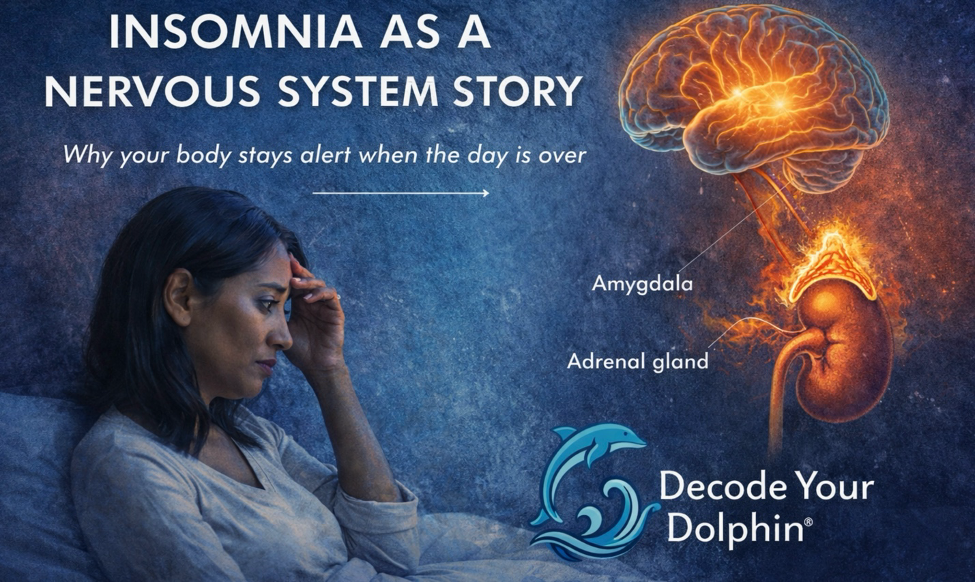
At night, when external demands finally quiet down, the body does not automatically relax. Instead, it continues the pattern it has practiced for decades. It remains alert, reviewing the day and preparing for what might come next. This is why midlife insomnia often feels so confusing. People are exhausted, yet their bodies refuse to rest.
Midlife Insomnia Is Not Only a Women’s Issue
Although midlife insomnia is frequently discussed in relation to menopause, men experience similar changes that are often overlooked. As men age, testosterone gradually declines along with other neuroendocrine shifts. Because this process happens slowly, it is often dismissed or ignored.
In men, these changes can show up as lighter sleep, more frequent nighttime awakenings, reduced stress resilience, irritability, or anxiety that feels unfamiliar. Cortisol may become more dominant, recovery takes longer, and sleep no longer feels deeply restorative. For men who have spent years in high responsibility roles, the nervous system has also been trained to stay ready. That readiness does not easily turn off at night.
This is why midlife insomnia affects both women and men. It is not a matter of willpower or poor habits. It is a reflection of how the nervous system has adapted to years of demand.
Knowing You Are Safe Does Not Always Help You Sleep
One of the most frustrating aspects of midlife insomnia is that many people are objectively safe. Life may be stable. Work may be steady. Family may be doing well. Yet the body continues to behave as though vigilance is required.
Safety is not a logical decision. The nervous system does not respond to reassurance alone. It responds to patterns learned over time. Quiet evenings, stillness, and the absence of distraction can feel unfamiliar to a nervous system that has spent years responding to constant demand.
This is why midlife insomnia is not resolved by simply telling yourself to relax. The body is not misbehaving. It is continuing to protect.
A Different Way to Understand Midlife Insomnia
We often label insomnia, anxiety, and nighttime alertness as dysfunction. But what if midlife insomnia is better understood as a protective response that has not yet been updated?
That eighty four year old woman’s nervous system carried her through one of the most devastating periods in modern history. Many adults in midlife carry nervous systems shaped by years of stress, responsibility, loss, or constant readiness of a different kind. These systems deserve respect rather than correction.
Trying to force sleep through pressure or control often backfires. The nervous system hears urgency, not safety. True rest emerges when the body begins to experience, over time, that conditions have changed and that it is allowed to soften without consequence.
This process is not about shutting the body down. It is about gently teaching it what is different now.
Helping the Nervous System Learn to Rest Again
Healing midlife insomnia involves understanding the biology beneath the experience. It means recognizing how hormones, stress physiology, and learned patterns of vigilance interact. It also means approaching sleep with curiosity rather than frustration.
Inside Decode Your Dolphin, this is the work we do with both women and men experiencing midlife insomnia in Florida and beyond. We help individuals understand their unique patterns of alerting, recognize why those patterns developed, and gently guide the nervous system toward a new baseline without fighting it.
Insomnia is not a personal failure. It is often a loyal protection still doing its job. When we begin from that understanding, the body no longer feels like an enemy to defeat. It becomes something to listen to, and that shift is often the first step toward real rest.